
Motorcycle Engine Parts and Their Functions
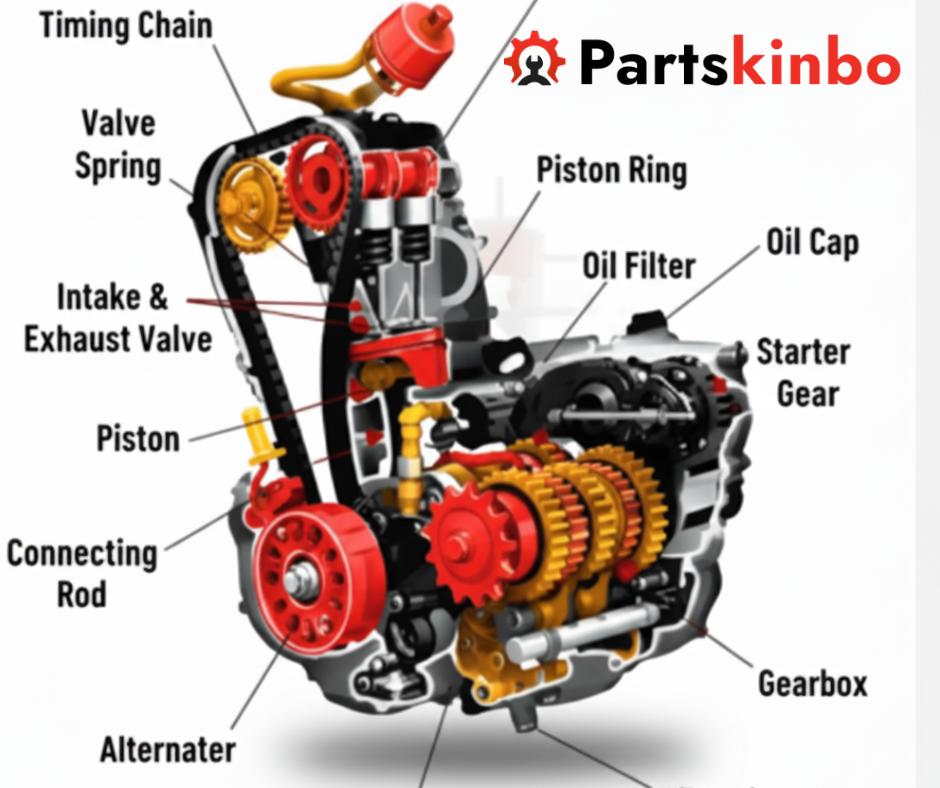
A motorcycle is more than just a two-wheel thing that moves you from A to B. It represents freedom, speed, and thrilling journeys! But beneath that mighty roar is a complex web of engine parts that work in harmony to keep your bike running at its peak. Whether you’re a motorcycling enthusiast, or someone who is simply interested in how motorcycles run, having an understanding of the parts of Motorcycle Engine Parts and Their Functions.
Ever ask yourself what’s going on “behind the curtain” (or in this case, under the gas tank) when you roll that throttle open? What fuels the engine that makes you roar and gives that forward momentum? The actual magic occurs inside of the engine, where a number of parts move in unison to produce power, monitor fuel and keep things running smoothly. But just like any machine, things may fail and that’s where bike engine repair comes into play.
In this article we will dive deep into the essential parts of a motorcycle engine, what they do, and how they work together to give you one hell of an experience. Whether you’re an experienced rider or new to bikes, knowing the function of these parts is key to ensuring that your motorcycle stays in top condition and runs smoothly.
Understanding the Motorcycle Engine
Before explaining the specific components, it is quite crucial to understand how a motorcycle engine functions as a complete system. Imagine the engine as the pounding heart of your bike. When you start a bike, the engine starts going through cycles of intake, compression, power and exhaust( also know as four stroke cycle) which creates the power that pushes it forward.
The motorcycle engine is a device for converting fuel into energy which is then converted to mechanical work. That, essentially is combustion: You mix fuel with air and then you set it on fire in order to create power. And now, let’s dissect the key components that make that all possible!
The Spark Plug: Igniting the Power
The spark plug is essential to the combustion engine. If the spark plug were missing, gas would not ignite and your engine would fail to start. Think of it as the “match” igniting the engine’s fire. As you start your bike, current travels through the spark plug, generating a spark that sets the fuel and air mixture in motion in the combustion chamber.
Typically, normal bicycle engine maintenance will include new spark plugs, as old ones may cause the engine to run poorly or even begin to misfire. Should you have trouble starting your bike don’t overlook the spark plug.
The Cylinder and Piston: Power Focus of the Engine
At the heart of your motorbike’s engine, both around which everything else rotates is the cylinder and piston. The piston rises and falls within the cylinder, compressing the air-fuel mix before transmitting the power to the crankshaft.
Think of the piston as the hand moving that energy upward and out. It is very important that the cylinder and piston be in serviceable condition, as damage or wear can severely limit an engine’s output.
The Crankshaft: From Power to Motion
The crankshaft is to the engine what a backbone is to you and me. It is responsible converting the up-and-down motion of the pistons into rotary motion that powers the wheels. The crankshaft is connected directly to the gearbox; and power transmission, therefore, significantly depends on proper function of it.
Any day now when you’re sat facing your bike in a situation where the engine’s running and the machine won’t move along, it could be as a result of something to do with your crankshaft, which is crucial for transferring that power.
The Timing Chain/Belt: Synchronizing Engine Components
the Engine Whether your car has a timing chain or belt, both are responsible for the synchronization of critical components within your engine.
It is the power of a timing chain or belt to make those intake and exhaust valves open and close at exactly the right time is what helps an engine run smoothly. It’s the conductor of an orchestra, ensuring all the parts play together.
A timing chain that is worn out results in poor performance, gas mileage and eventually the death of your engine, so making sure the component has regular checkups is crucial.
The Carb: Feeding the Ride
The carburetor (or fuel injector) on a chainsaw is designed to mix the air and fuel in the best ratio for burning. Fuel enters the carburetor at a constant rate so, as air passes into the venturi, it sips more fuel to keep things balanced The carburetor is common on older motorcycles as well as newer ones that have not yet switched over to fuel injection.
If you find your engine sputtering, slow to start or your vehicle meeting poor gas mileage and having other trouble running smoothly, that could be the sign of a dirty fuel system which requires bike engine repair.
The Camshaft: Slave of Intake and Exhaust Parties
The camshaft regulates when an engine’s valves open and close. It is functionally the “gatekeeper” for both fuel and air on the way in to the combustion chamber, and exhaust gases on their way out. The correct performance and fuel economy relies on a properly operating camshaft.
When a camshaft fails, it can cause your engine to run poorly or not function properly at all requires an involved and sometimes costly bike engine repair.
The Clutch – Being On and Off the Power
The clutch transmits the engine power to the transmission, and permits the rider to interrupt the engine’s power to shift gears or stop. It’s akin to the motorcycle’s pause button — it temporarily detaches the engine from the wheels, when you need it.
Slipping clutches are also a problem that comes up, as well as not being able to fully engage the clutch and shift gears from competition shifting bike engine repair is necessary.
The Transmission: Shifting Gears Smoothly
The transmission is what allows you to switch gears. It’s also essential in managing the bike’s speed and torque. A motorcycle’s transmission operates on gears that are set in motion by the clutch. This guarantees you the ability to easy transition between different speeds when riding.
If you notice that your gears are not working properly, the fault might be coming from either the clutch or the transmission, both of which can be taken care of in a bike engine repair service.
The Exaust is The Engine’s breath
These gases are what is called exhaust gas and all need to be sacked. The system is composed of the exhaust pipe, the muffler, and a catalytic converter. Not only does it eliminate harmful emissions, it also has the potential to reduce noise.
A bad exhaust system can really affect your vehicles performance, as well as contribute to higher pollution.
The oil system: lubricating everything
Lubrication – is everything for the health of our motorcycle engine. The oil system circulates oil to minimize those issues. It also contributes to cooling the engine as it dissipates heat from the engine parts.
The practice of frequent monitoring and changing motorcycle oil is among the simplest but most vital practices for extending life span of the engine.
The cooling mechanism: Keep the engine from getting too hot
The cooling system maintains the temperature of the engine and keeps it from overheating. A few motorcycles have air cooling and some with radiators are liquid-cooled. The cooling unit is “the whole thing” — essential for preventing the engine from seizing up once it gets too hot.
Bicycle Engine Repair: Problem with Motor and Possible Causes
Common repairs include backfiring, misfires, rough idling or loss of power. Blown spark plugs, clogged fuel systems or even low oil levels are some examples of issues that could cause your mower to pressurize. Keeping up with routine maintenance and making repairs before they go from bad to worse can help ensure your bike runs the way it should without breaking the bank.
Maintenance Tricks for Motorcycle Engine Components
Here’s a few tips to prevent damage in your motorcycle engine parts:
Change the oil and spark plugs regularly.
Clean the air filter or replace.
Make sure the chain is tension adjusted.
Maintain a clean and filled cooling system.
Check exhaust for leakage at the exhaust system.
Conclusion
All of your motorcycle’s engine parts work together and are scored at the factory to make sure they get along. From the spark plug that starts the engine to the cooling system that stops it from running too hot, all of them are essential. By the time you understand how they work, maintaining your bike and dealing with problems that may arise will come much easier to you. And don’t forget, regular bike engine repair and maintenance is the secret to keeping your motorcycle on road and running for years to come.
FAQs
What is the basic components of a motorcycle engine?
The basic components of a motorcycle engine are cylinder, piston, carburetor or fuel injector, crankshaft, clutch and transmission, spark plug(s), exhaust system (the most recent model from 2010 forward has an oil cooler) however there are many more parts to the engine.
How can I tell when it’s time to repair my motorcycle engine?
Indications that it may be time to repair your motorcycle engine include a lag in performance, misfiring, rough idle, power loss or strange noises coming from the engine.
What can I do if my bike engine is getting heat?
If your bike is running too hot, investigate the cooling system, make sure you have sufficient coolant and look for blockages or leaks in the radiator or hoses.
How frequently do you need to change the oil in your bike?
It’s best to change your motorcycle oil every 3,000-5,000 miles on average, but you should also consider the type of oil used and what your bike’s manufacturer suggests.
Am i able to do bicycle engine repair on my own?
Simple or basic repairs such as spark plug replacement, changing of oil etc can be done at home but bike engine repairs that are more complicated should only handle by professionals.

অরিজিনাল পার্টস | দীর্ঘস্থায়ী ব্যবহার
Jashore Software Technology Park, Jashore.


Copyright 2025.partskinbo . All rights reserved
